
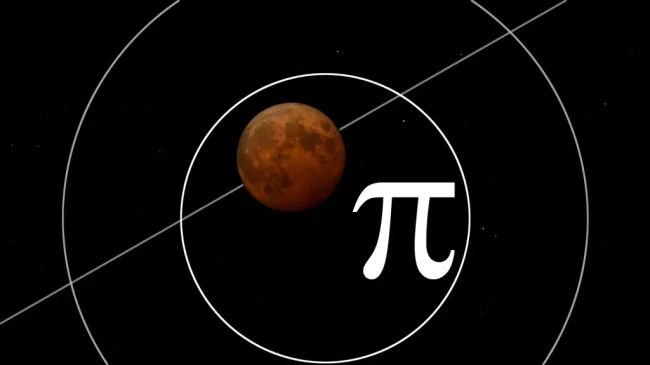
From π to Orbit: The Mathematics Behind Space Technology
Every year on March 14, the world celebrates Pi Day, honoring the mathematical constant π (pi, π=3.14). While it is often introduced in classrooms, π plays a crucial role in modern technologies — including space systems.
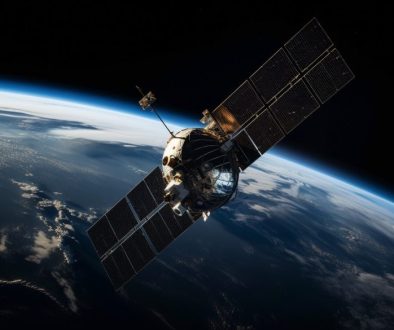
In aerospace engineering, satellites move in circular and elliptical orbits that require precise mathematical calculations. Constants like π are used in formulas for orbital mechanics, antenna design, signal transmission, and satellite imaging. These calculations help ensure accurate communication between satellites and ground stations, enabling technologies such as navigation, Earth observation, and global connectivity.
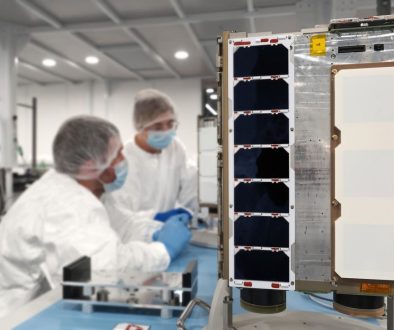
At CIPR, mathematics lies at the heart of our work in space technology and space education. In our projects, π appears in many practical applications, including orbital calculations for satellite mission design, parachute testing and development within our “Space 1.0” educational program, satellite structure design, antenna and communication systems, and mission simulations used across our initiatives. Through these programs and products, students and young innovators gain hands-on experience applying mathematical principles to real-world space engineering challenges.
Pi Day reminds us that even the most advanced technologies start with fundamental science. From π to orbit, mathematics continues to power innovation and space exploration.

 EN
EN  HY
HY