
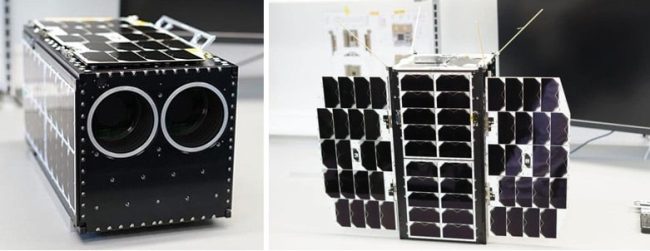
Why ArmSat-1 Fell
ArmSat-1 gradually lost altitude from the moment it was launched because it had no propulsion system to maintain its orbit. In low Earth orbit, even very thin air creates atmospheric drag, which slowly slows a satellite down. As ArmSat-1 descended into lower altitudes, the atmosphere became denser, and the decay accelerated rapidly.
According to calculations performed by our orbital mechanics specialist, Hayk Khachikyan, the situation was intensified by periods of strong solar activity, which heat and expand the upper atmosphere. This increases drag even further and speeds up orbital decay. By mid-2025, ArmSat-1 had reached the altitude range where a CubeSat’s fall becomes irreversible, leading to its final descent and re-entry.

 EN
EN  HY
HY